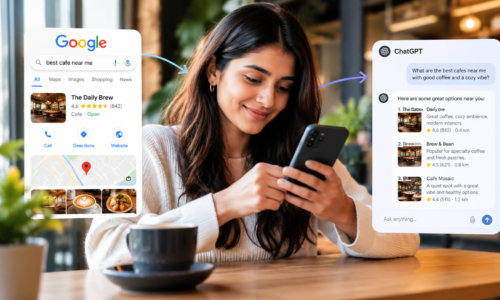
Every day, potential customers search online for products, services, and businesses like yours. They may be looking for a local service provider, comparing companies, checking reviews, or trying to find the right solution to a specific problem.
But here is the important question:
When your potential customers search, do they actually find your business?
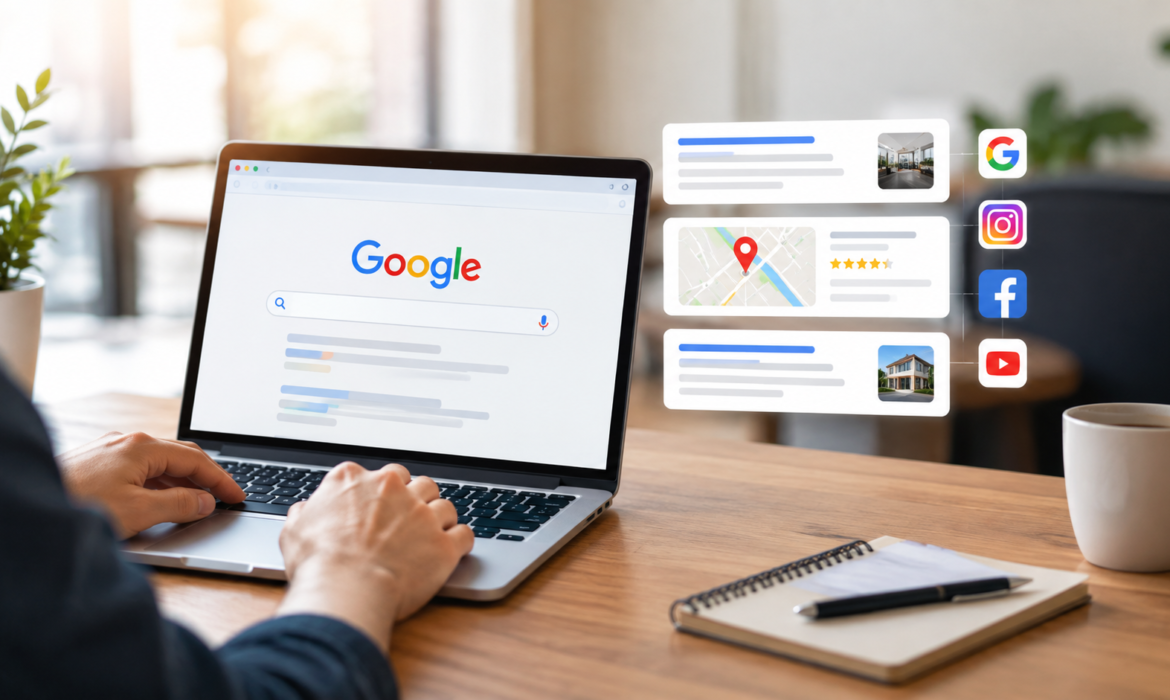
Today, online visibility depends on how easily your business can be discovered across the places where customers are searching — including Google Search, Google Maps, social media, business directories, and increasingly AI-powered search experiences.
If your business is difficult to find, your competitors can capture the attention — and eventually the customers — that you were trying to reach.
Section 1: Being Online Is Not the Same as Being Visible
Many businesses believe that having a website means they have an online presence.
Technically, they do.
But from a customer’s perspective, there is a big difference between having an online presence and being visible when someone is actively looking for what you offer.
Imagine someone searches Google for a service you provide. Several businesses appear on the screen. The customer is unlikely to scroll through dozens of pages looking for your company. They will usually consider the businesses they can find quickly, understand easily, and trust.
Section 2: Why Customers May Not Be Finding Your Business
If your business is not appearing when customers search, the problem may not be just one thing. SEO, website structure, content, local visibility, competition, and customer intent can all influence discoverability.
Here are some common reasons:
- Your website is not optimized for relevant searches Search engines need clear signals about what your business offers and which topics your pages are relevant to.
- You are targeting the wrong keywords Customers may use completely different words than the ones you use internally to describe your services.
- Your Google Business Profile is incomplete Missing or outdated information can make it harder for customers to understand your business locally.
- Your website content does not answer customer questions Customers often search for problems and questions rather than simply searching for company names.
Section 3: Customers Don't Search in Just One Way
One of the biggest changes in digital marketing is that customers no longer follow a single path.
A potential customer might first discover your business through Google. Another might see your Instagram profile. Someone else might hear about you from a friend and then search your brand name. Another customer may see an advertisement and visit your website later.
The customer journey can involve several digital touchpoints before a person decides to contact a business.
For example:
Google Search → Website → Reviews → Social Media → WhatsApp → Enquiry
Another customer might follow:
Instagram → Website → Google Search → Reviews → Contact
Section 4: What You Can Do to Become Easier to Find
Improving visibility does not mean simply publishing more content or increasing your advertising budget.
It starts with understanding where your customers search, what they search for, and what information they need before contacting you.
A strong digital visibility strategy can include:
- SEO: Optimize your website around relevant customer searches and search intent.
- Local SEO: Strengthen your visibility for location-based searches and Google Maps.
- Content Marketing: Create useful content that answers real customer questions.
- Google Business Profile: Keep your business information, services, photos, and updates accurate.
- Website Optimization: Make your website fast, clear, mobile-friendly, and easy to navigate.
- Social Media: Maintain an active presence where your target audience spends time.
- Online Reviews: Encourage genuine customer feedback and respond professionally.
- Paid Advertising: Use Google Ads and other platforms when paid visibility can support your business goals.
- Analytics & Tracking: Measure where visitors come from and what they do after arriving.
- Conversion Optimization: Turn visibility into enquiries, calls, bookings, or sales.
5-Point Digital Visibility Check
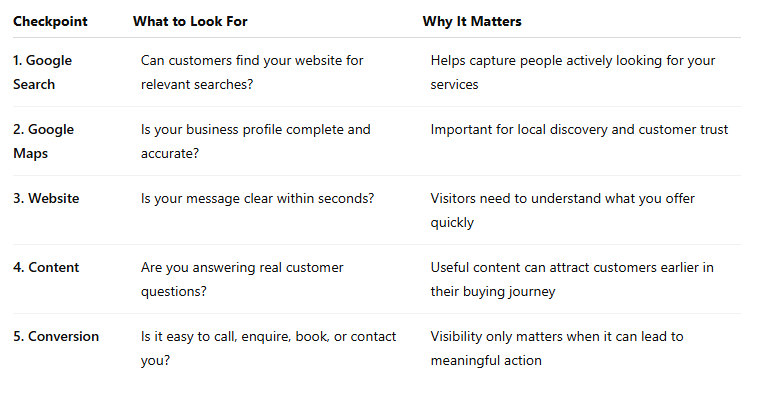
Conclusion: Don't Let Your Customers Search Past You
Your customers are already searching.
They are searching for solutions, comparing businesses, reading reviews, checking websites, looking at social profiles, and deciding who they can trust.
The real challenge is making sure your business appears when those searches happen.
If your competitors are consistently appearing where your customers are searching, the question is not whether people are looking for your service.
Don’t just be online. Be discoverable. Be trusted. Be chosen.
👉 Visit Apex Digital today and start building a digital presence that works for your business.Frequently Asked Questions
1. Why is my website not appearing on Google?
Several factors can affect Google visibility, including website SEO, keyword targeting, content quality, technical issues, competition, backlinks, website authority, and search intent. A website can exist online without ranking prominently for the searches that matter to the business.
2. Is having a website enough to attract customers?
No. A website is an important part of your digital presence, but customers also need to discover and trust your business. SEO, local search, content, social media, reviews, advertising, and conversion optimization can all contribute to customer acquisition.
3. How can I improve my local visibility?
Start by optimizing your Google Business Profile, maintaining accurate business information, creating locally relevant website content, collecting genuine reviews, and developing a consistent local SEO strategy.
4. Should I focus on SEO or paid advertising?
SEO and paid advertising serve different purposes. SEO can help build organic visibility over time, while paid advertising can provide targeted visibility when you want to reach specific audiences or searches. The right combination depends on your business goals, market, competition, and budget.
5. How do I know whether my digital marketing is working?
Look beyond simple traffic numbers. Track meaningful metrics such as qualified leads, phone calls, enquiries, bookings, conversion rates, cost per lead, organic visibility, and revenue generated. The goal is not just more visitors — it is attracting the right visitors and turning them into customers.